
We have officially crossed the threshold where standard algorithmic tweaks no longer yield exponential leaps in artificial intelligence performance. Today, the core differentiator between a failing experimental prototype and an industry-disrupting enterprise AI solution boils down to a single, critical asset: clean, precisely structured data.
From autonomous vehicles and predictive healthcare platforms to enterprise automation and large language models (LLMs), every modern AI solution depends on accurately labeled training data. As AI systems become more specialized and businesses race toward automation at scale, organizations are realizing that clean, structured, and context-rich datasets are the true fuel behind next-generation innovation.
Today, data annotation is no longer viewed as a repetitive technical process hidden behind machine learning pipelines. It has become a strategic pillar that directly impacts model accuracy, operational efficiency, automation reliability, and long-term AI scalability.
What is Data Annotation?
Data annotation is the process of labeling raw data such as images, text, audio, or video so AI and machine learning models can understand and learn from it.

Annotated datasets help AI systems recognize patterns, objects, speech, emotions, intent, and behaviors. Depending on the use case, annotation may involve:
- Image labeling
- Video object tracking
- Text classification
- Sentiment analysis
- Speech transcription
- Named entity recognition (NER)
- Semantic segmentation
- RLHF (Reinforcement Learning from Human Feedback)
Modern annotation providers now support image, video, text, and audio labeling at enterprise scale with advanced quality assurance frameworks.
Why Data Annotation Matters More in 2026
AI models are becoming increasingly data-hungry. Large Language Models (LLMs), computer vision systems, and multimodal AI require massive volumes of highly accurate labeled data.
In 2026, businesses are focusing on:
- Reducing AI hallucinations
- Improving model accuracy
- Enhancing contextual understanding
- Training industry-specific AI models
- Building ethical and unbiased AI systems
Poor-quality annotation can result in inaccurate predictions, model drift, compliance risks, and higher retraining costs. Enterprise AI companies now consider data labeling a strategic investment rather than a simple operational task.
The Hidden Bottleneck Behind AI Automation Scaling
One of the biggest challenges facing enterprise AI adoption is data preparation.
Industry reports consistently show that data scientists spend the majority of their time organizing, cleaning, validating, and labeling datasets rather than building machine learning models. This creates a major operational bottleneck for companies trying to scale AI automation efficiently.
As data volumes grow from gigabytes to petabytes, organizations struggle with:
- Annotation consistency
- Quality assurance
- Version management
- Security compliance
- Multi-format data processing
- Scalable workforce management
Without structured annotation pipelines, AI projects often face delays, increased costs, and unstable model performance.
This is especially critical for industries where precision is non-negotiable, including:
- Healthcare
- Manufacturing
- Finance
- Automotive
- Security
- Retail automation
For these industries, even minor annotation errors can create significant downstream failures in production systems.
Computer Vision Annotation: Teaching Machines to See
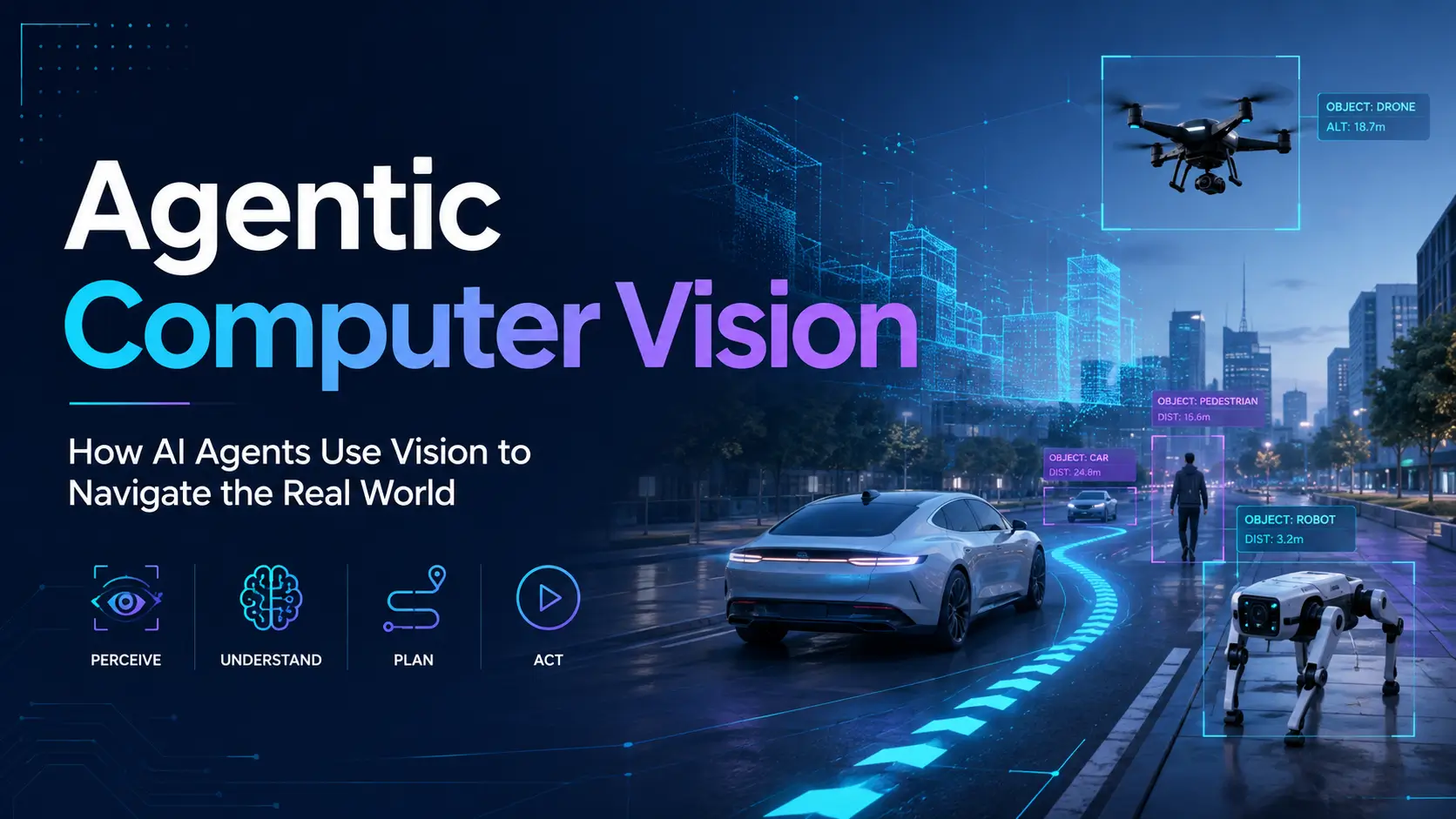
Computer vision annotation is one of the most important components of modern AI systems.
It enables machines to identify, classify, and interpret visual information from images and videos. This technology powers everything from self-driving cars and facial recognition systems to smart surveillance and industrial automation.
Computer vision annotation involves several advanced labeling techniques, including:
Bounding Boxes: Used to identify and locate objects within an image.
Polygon Annotation: Provides precise outlining of irregularly shaped objects.
Semantic Segmentation: Assigns labels to every individual pixel within an image for maximum accuracy.
Keypoint Annotation: Tracks specific object points for motion analysis and facial recognition.
Object Tracking: Monitors moving objects across multiple video frames.
As autonomous systems become more advanced in 2026, the demand for highly accurate computer vision annotation continues to increase rapidly.
NLP Data Tagging and the Rise of Intelligent Language Models
Natural Language Processing (NLP) has become central to next-generation AI systems.
From AI chatbots and virtual assistants to automated legal analysis and multilingual customer support, NLP models rely heavily on accurate text annotation.
NLP data tagging helps AI systems understand:
- Intent
- Sentiment
- Context
- Entities
- Relationships
- Human conversation patterns
Modern NLP annotation workflows include:
- Named Entity Recognition (NER)
- Intent classification
- Sentiment analysis
- Topic categorization
- Multi-turn dialogue annotation
- RLHF (Reinforcement Learning from Human Feedback)
As generative AI and large language models continue evolving, businesses require increasingly sophisticated annotation methods to improve contextual accuracy and reduce hallucinations.
This makes NLP data tagging one of the fastest-growing segments within the AI annotation industry.
Human-in-the-Loop Annotation is Driving AI Reliability
Although automation tools are improving annotation speed, human expertise remains essential for maintaining high accuracy.
Human-in-the-loop (HITL) annotation combines AI-assisted labeling with expert human validation. This hybrid approach ensures scalability without sacrificing precision.
In 2026, HITL systems are becoming the industry standard because they help organizations:
- Reduce annotation errors
- Improve model accuracy
- Handle edge cases effectively
- Minimize bias
- Maintain quality consistency
AI-assisted annotation tools can automate repetitive labeling tasks, but human reviewers are still required to validate complex scenarios, contextual meaning, and domain-specific data.
This balance between automation and human intelligence is critical for building enterprise-grade AI systems.
Industry Statistics Highlighting the Importance of Data Annotation

As AI adoption accelerates in 2026, high-quality training data has become a major competitive advantage for businesses building intelligent systems. Industry reports suggest that data preparation and annotation consume nearly 70–80% of total AI project development time, highlighting the growing importance of structured and accurate datasets.
At the same time, the global data annotation market is projected to experience rapid growth by 2030 due to rising demand for:
- Large Language Models (LLMs)
- Computer vision systems
- Generative AI applications
- Enterprise AI automation
- Multimodal machine learning models
These trends clearly show that data annotation is no longer just a support task, it is now a core infrastructure component behind next-generation AI development.
How A3 bees Innovation Supports Next-Gen AI Development
At A3bees Innovation, data annotation is treated as a precision-driven engineering process rather than a simple outsourcing task.
Our annotation services are designed to support organizations building advanced AI and machine learning systems across multiple industries.
Customized Annotation Workflows
We develop project-specific pipelines tailored to your AI model architecture and deployment objectives.
Domain-Specific Experts
Our specialized teams understand industry-specific requirements across healthcare, finance, manufacturing, legal, retail, and enterprise automation.
Multi-Layer Quality Assurance
We combine human validation with advanced quality control systems to maintain high annotation accuracy across every dataset.
Scalable Infrastructure
Whether your project requires thousands of annotations or millions of labeled entities, our infrastructure supports secure and scalable delivery.
AI Automation Scaling
We help organizations eliminate annotation bottlenecks and accelerate AI deployment timelines through structured, high-efficiency workflows.
By transforming raw data into reliable ground truth datasets, A3bees Innovation helps businesses build smarter, faster, and more accurate AI systems.
Real-World Examples of Data Annotation in AI
Real-world AI platforms depend heavily on accurate data annotation to deliver reliable user experiences and automation performance.
For example, Tilesview.ai, created by A3 Bees Innovations uses AI-powered room visualization technology that allows users to preview tiles, flooring, wall coverings, paint, rugs, and other surfaces in real-time virtual spaces. The platform supports over 50,000 daily users and has helped increase customer conversions while reducing product returns.
Behind such AI visualization systems, high-quality image annotation and computer vision datasets help improve:
- Room and surface detection
- Flooring and wall placement accuracy
- Object recognition
- Realistic rendering
- Real-time visualization performance
This demonstrates how accurate data annotation directly impacts AI reliability, customer experience, and business growth in modern AI-powered platforms.
Future of Next-Gen AI in 2026
The future of next-generation AI will not be determined solely by larger models or more computational power. It will depend on the quality, precision, and scalability of the training data behind those systems.
As AI becomes increasingly integrated into critical industries, businesses can no longer afford unreliable annotation practices or low-quality datasets.
Organizations investing in high-quality training data today are building:
- More accurate AI systems
- Safer automation workflows
- Better customer experiences
- Faster deployment cycles
- Sustainable long-term AI growth
In 2026, data annotation is no longer a background process—it is the core infrastructure powering the future of artificial intelligence.
Final Thoughts
The AI revolution is entering a new phase where data quality defines innovation potential. From computer vision annotation and NLP data tagging to human-in-the-loop validation and scalable automation pipelines, data annotation now serves as the foundation for every successful AI initiative. Businesses looking to remain competitive in the rapidly evolving AI landscape must prioritize clean datasets, accurate labeling workflows, and scalable annotation strategies.
At A3bees Innovation, we help organizations transform raw, unstructured information into high-performance machine learning assets that drive real-world results. If you are building next-generation AI solutions and need reliable, scalable, and enterprise-grade data annotation services, connect with the team at A3bees Innovation today and accelerate your AI roadmap with confidence.